





Pokémon Investment Cards: What Actually Holds Value (and Why My 2002 Legendary Collection Dark Blastoise Box Topper PSA 10 Is a Standout)
If you’ve spent any real time in the Pokémon market, you already know the truth: not every “rare” card is a good investment card. Some are rare because nobody kept them… and some are rare because nobody wanted them. Some spike because of hype cycles, content creators, or a hot set release—then cool off for years. And some cards quietly compound in value because they sit at the intersection of true scarcity, collector nostalgia, and high-grade difficulty.
That last category is what long-term Pokémon investing is really about.
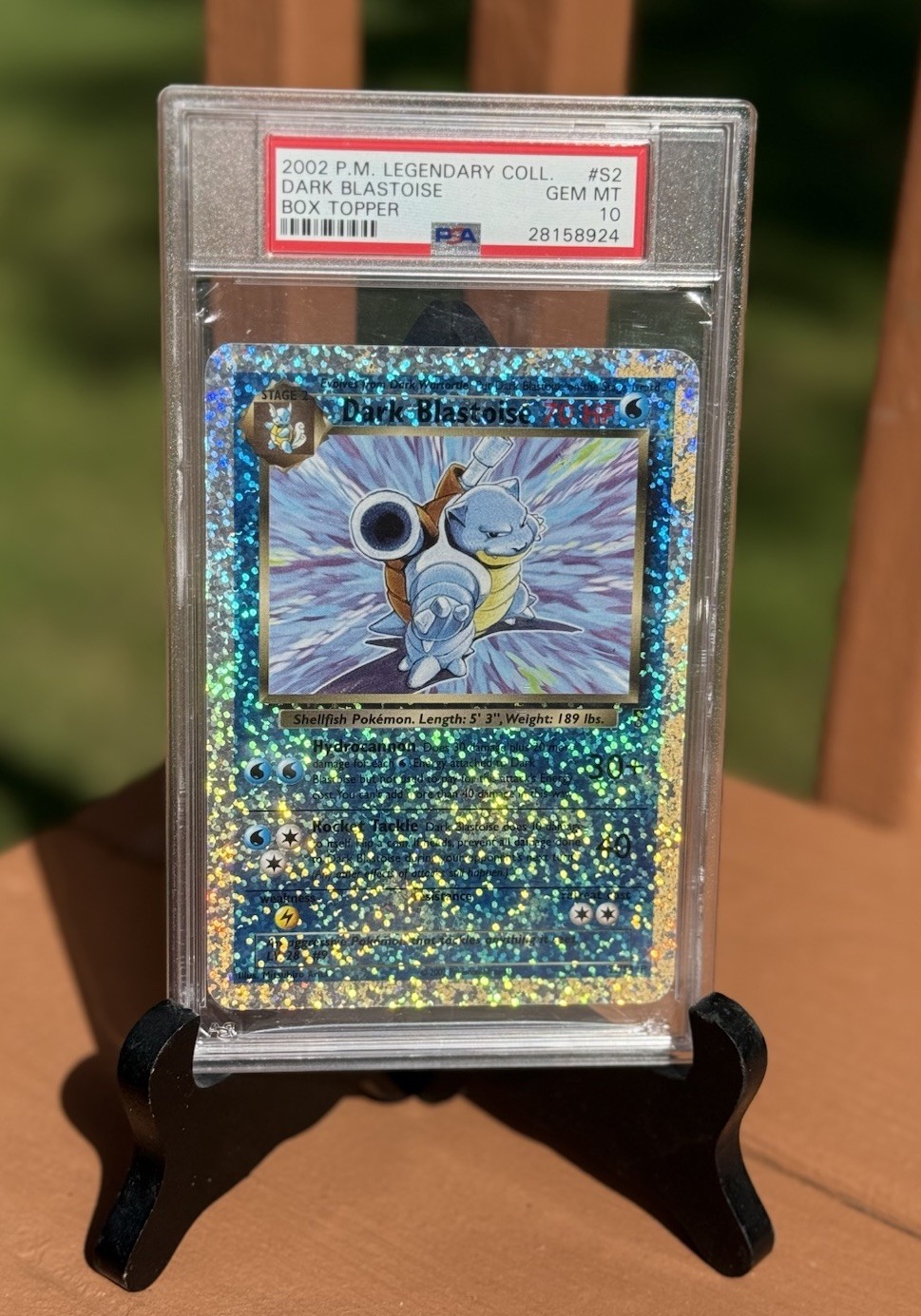
In this article, I’m going to break down what makes a Pokémon card an investment-grade collectible, how to think about risk and time horizon, and why one of my favorite pieces—the 2002 Pokémon Legendary Collection #S2 Dark Blastoise Box Topper, graded PSA GEM MT 10—checks a lot of the boxes serious collectors look for.
What “Investment-Grade” Means in Pokémon
The phrase “investment card” gets thrown around way too loosely. A better way to think about it is investment-grade collecting: buying cards that have a strong probability of maintaining demand and value across multiple market cycles.
Investment-grade Pokémon cards typically share a few traits:
1) The card has enduring demand
Enduring demand comes from:
- Iconic Pokémon (Charizard, Blastoise, Venusaur, Pikachu, Eeveelutions)
- Iconic eras (WOTC / early EX / nostalgic sets)
- Iconic artwork or presentation (holographic treatments, promos, trophies)
If a card appeals only to “people who are currently opening this modern set,” that demand can fade fast. If it appeals to people who grew up with the franchise and are now adult collectors, it tends to persist.
2) The supply is meaningfully limited
True scarcity isn’t just “it’s a secret rare.” It’s:
- Low print relative to demand
- Low survival rate
- Low high-grade population
- Unique or short-printed formats (like box toppers, stamped promos, certain regional releases)
You want supply constraints that can’t be solved by “the next wave of product” or “people grading more copies.”
3) Condition sensitivity matters
This is huge. The Pokémon market is condition-obsessed—and for good reason. Many older cards, promos, and specialty items are extremely hard to find in pristine condition. When a PSA 10 is legitimately difficult, it creates a “ceiling scarcity” that often becomes more important than raw rarity.
4) The card has a story collectors understand
The best long-term holds are easy to explain:
- “It’s a premium early-era piece.”
- “It’s a hard-to-grade format.”
- “It features a top-tier character.”
- “It came from a niche product and few survived clean.”
In investing terms, you want a card with a strong narrative moat.
The Core Pillars of Pokémon Card Investing
Here’s the practical framework I use, and it’s the same one I recommend to anyone building a serious portfolio:
Pillar A: Blue-chip characters and eras
“Blue chip” doesn’t mean “most expensive.” It means “most proven.”
- Base Set / Neo / early WOTC promos
- Early EX era gems
- Iconic starters and mascots
- Special formats like Japanese promos, trophies, and unique distribution pieces
Pillar B: Scarcity in the grade
Collectors often focus on total pop, but the real leverage often comes from the PSA 10 population being meaningfully small—especially for cards that are notoriously tough in gem mint.
Pillar C: Liquidity
A card can be rare and still be a pain to sell. Liquidity comes from:
- Recognizable Pokémon
- Recognizable set/product
- A strong grading label (PSA tends to move fastest in the mainstream market)
The more buyers you have, the safer the hold.
Pillar D: Time horizon and cycles
Pokémon moves in cycles. You don’t need to time the top perfectly—your job is to hold cards that remain desirable even when the market cools.
The cards that survive downturns are the ones people still want even when they’re not “investing.” That’s collector demand.
Why Box Toppers Are a Quiet Power Category
Box toppers are one of those categories that serious collectors respect, but casual buyers sometimes overlook—until they handle one in person.
A box topper isn’t just “another card.” It’s usually:
- Larger format (more surface area, more condition flaws)
- A premium insert tied to a specific product
- Less likely to be stored properly long-term
- Harder to grade because any edge wear, corner whitening, or print line becomes more visible
That combination often produces a situation where high-grade examples are legitimately scarce—and scarcity in high grade is one of the most reliable “value gravity” forces in the hobby.
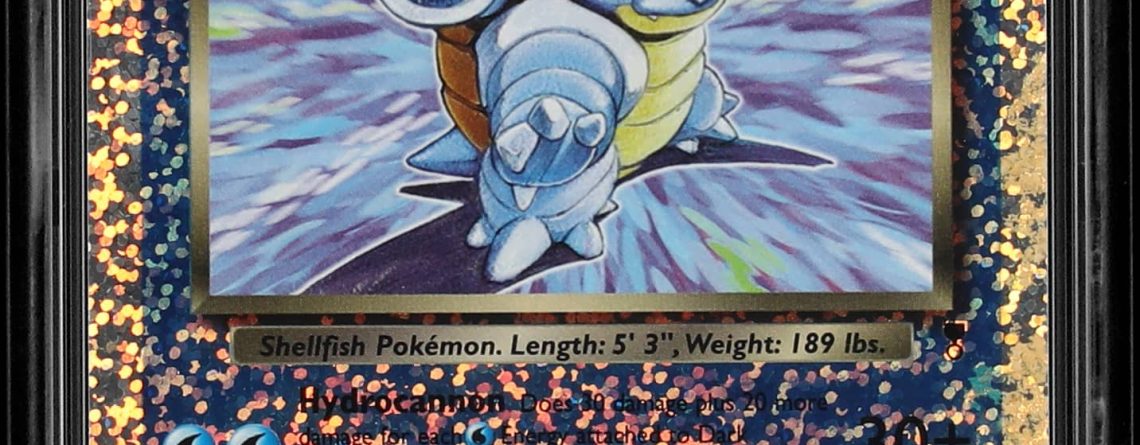
Spotlight: 2002 Pokémon Legendary Collection #S2 Dark Blastoise Box Topper – PSA GEM MT 10
Now let’s talk about the card that inspired this article.
Dark Blastoise is already an iconic character variant. It blends nostalgia, attitude, and that early-era “Team Rocket” vibe that collectors love. But what makes this particular piece special is the format and context:
1) Legendary Collection is a major nostalgia set
Legendary Collection sits in that sweet spot: old enough to feel truly vintage to many collectors, but not so old that everything is completely locked away in private collections. It’s also tied to a period when Pokémon was cementing itself culturally.
Collectors who understand the early 2000s era consistently treat Legendary Collection as an important piece of the franchise’s history.
2) Box toppers are condition nightmares in the best way
This is where it gets interesting.
A box topper has:
- More surface to scratch
- More edge exposure
- More corner vulnerability
- Often less protective storage historically (people weren’t sleeving everything like they do now)
So when you see PSA GEM MT 10 on a box topper, you’re looking at a piece that beat the odds. That grade isn’t just a number—it’s proof of survival, care, and grading difficulty.
3) Blastoise demand is evergreen
Blastoise is one of the “forever” characters. Even when modern set hype fades, the original starters keep pulling collectors back in. They’re the emotional anchor of the hobby.
That matters because demand that’s rooted in identity and nostalgia tends to be far more durable than demand rooted in short-term speculation.
4) Unique presentation creates premium appeal
Collectors pay up for cards that feel premium. A box topper has presence. It displays differently. It feels like an event item. And in a world where more collectors are building display walls, showcases, and graded “centerpieces,” that matters.
How I’d Position This Card in a Pokémon Investment Portfolio
If you’re building a serious Pokémon position, you want diversification—not just all modern chase cards or all one era.
A balanced portfolio might include:
- A couple blue-chip grails (Base Set / Neo / iconic Japanese promos)
- A few high-grade “hard mode” items (box toppers, stamped promos, tough PSA 10s)
- A small allocation to modern (for upside, but higher volatility)
- Some personal passion holds (because you want to enjoy the hobby too)
In that structure, a PSA 10 Legendary Collection Dark Blastoise Box Topper fits beautifully as a scarcity-in-grade centerpiece—a card that can stay desirable even when the market is sleepy.
Risk Factors to Be Honest About
No collectible is risk-free. A smart collector acknowledges risks:
- Market cycles: prices can dip for long stretches.
- Liquidity: specialty items can take longer to sell than mainstream holos.
- Pop report changes: more copies can always be graded over time (though true PSA 10 scarcity often holds).
- Taste shifts: the hobby’s attention moves, but iconic characters usually retain demand.
The goal isn’t “guaranteed profit.” The goal is stacking odds in your favor with cards that have durable demand and meaningful scarcity.
The Bottom Line: Buy the Intersection of Nostalgia, Scarcity, and Grade Difficulty
If you want to treat Pokémon as an investment category, the best strategy I’ve found is simple:
Buy iconic characters, in premium or difficult formats, at the highest grade you can justify—then hold through cycles.
That’s exactly why I love the 2002 Pokémon Legendary Collection #S2 Dark Blastoise Box Topper – PSA GEM MT 10. It’s not just rare—it’s rare in the way that matters: condition-sensitive, display-worthy, and tied to a beloved era with an evergreen character.
Whether you’re collecting for passion, profit, or both, these are the types of cards that tend to remain relevant long after the hype moves on to the next big release.